
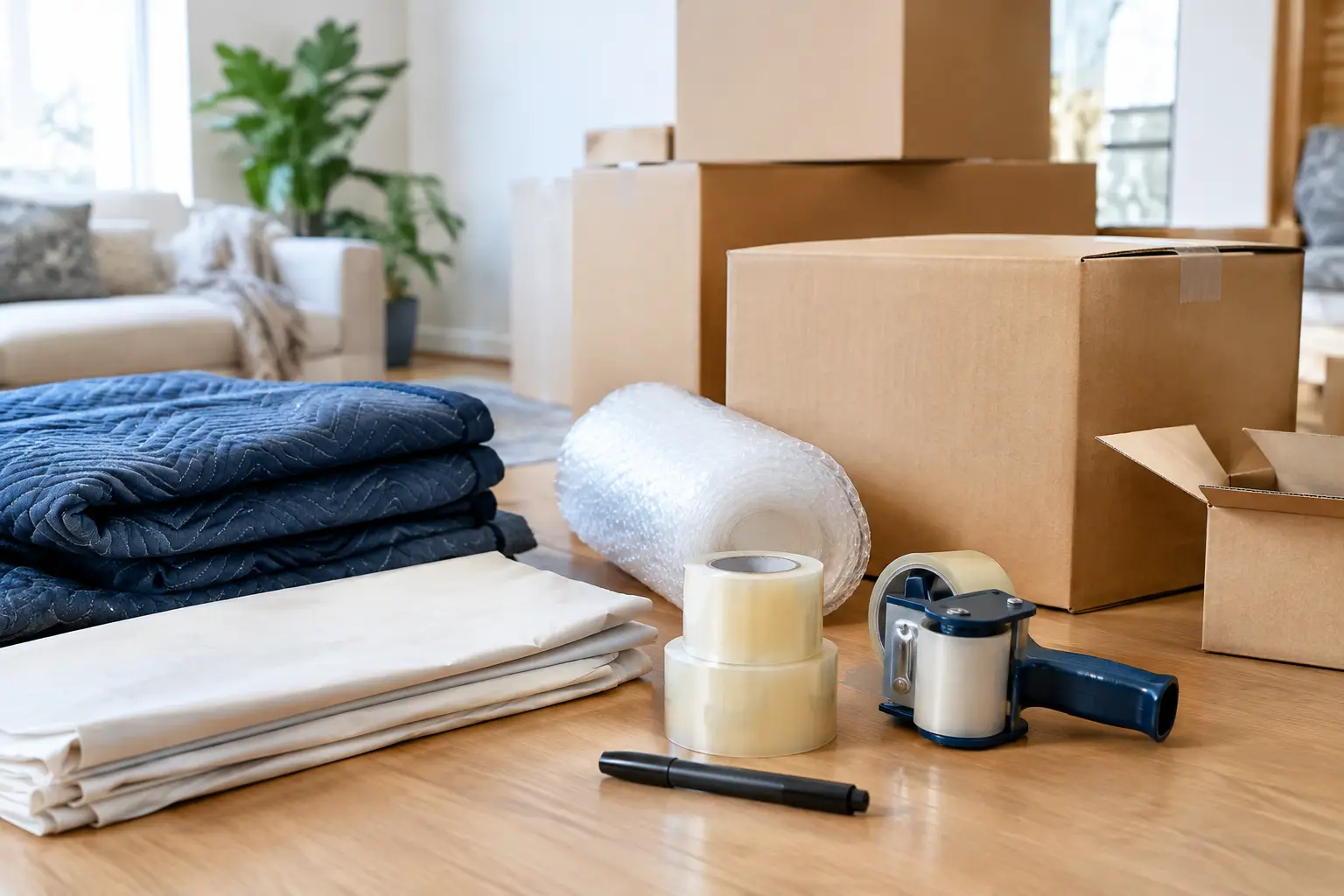
A move can start to feel difficult before a single box is filled. Usually, it happens when you are halfway through packing the kitchen, run out of tape and realise the only boxes left are too small for the items you need to protect. This packing supplies checklist helps you buy the right materials before moving day, pack with less stress and give your belongings a better chance of arriving safely.
You do not need to buy every packing product available. The right amount depends on the size of your property, how much you own and whether you are packing yourself or using a professional packing service. The aim is simple: use strong materials where they matter, label clearly and avoid leaving fragile or essential items until the last minute.
Your essential packing supplies checklist
For most house moves, start with a practical core of boxes, protection and labelling materials. Buying a mixture of box sizes is more useful than choosing one size for everything. Small boxes are safer for books, tins and other heavy items. Medium boxes suit everyday household goods, while large boxes should be reserved for lighter belongings such as bedding, cushions and clothes.
Your main packing supplies should include:
- Strong double-walled cardboard boxes in small, medium and large sizes
- Packing tape and a sturdy tape dispenser
- Bubble wrap for fragile and high-value items
- Packing paper or plain unprinted paper for wrapping crockery and glassware
- Furniture covers, moving blankets or old clean sheets
- Stretch wrap for drawers, furniture and loose parts
- Permanent marker pens and clear labels
- Scissors or a craft knife, used carefully and kept away from children
- Zip bags or small sealable bags for screws, brackets and cables
- Mattress bags and sofa covers where needed
- A marker or coloured stickers for room-by-room identification
If you are moving from a larger family home, allow more boxes than you first expect. It is far better to have a small number left over than to overfill boxes or use unsuitable bags at the end of a long packing day.
Choose boxes that match what you are packing
Not every item belongs in a standard cardboard box. Matching the container to the contents reduces breakages and makes loading safer for everyone.
Small boxes for heavy belongings
Books, records, tools, canned food, paperwork and bottles become extremely heavy very quickly. Pack them in small boxes and fill any gaps with packing paper. A box should be manageable for one person to lift without straining, not packed until the cardboard bows at the sides.
Medium and large boxes for lighter items
Medium boxes work well for kitchenware, toys, shoes, folded clothes and general household items. Large boxes are useful for duvets, pillows, lampshades and bulky but lightweight belongings. Do not use a large box for heavy kitchenware simply because it has more space.
Wardrobe boxes can save time if you have formal clothing, long coats or garments that crease easily. They are not essential for every move, but they are helpful when time is tight or you need to unpack clothes quickly at the new property.
Specialist protection for mattresses, TVs and furniture
Mattress bags keep bedding mattresses clean while they are carried and transported. Protective covers are also worthwhile for sofas and upholstered chairs, especially in wet weather or when moving through shared hallways and stairwells.
Televisions, mirrors and artwork need more than a loose blanket. If you still have the original packaging, use it. If not, use purpose-made picture boxes or thick cardboard protection, then clearly mark the package as fragile. Keep TVs upright where possible, and never place heavy boxes on top of them.
Protect fragile items properly
The kitchen is often the room that takes the longest to pack well. Plates, glasses and mugs should be wrapped individually with packing paper, then placed upright rather than flat where possible. Add a cushioned layer to the bottom and top of the box, and fill empty spaces so items cannot shift during transport.
Bubble wrap is useful, but it is not the only answer. Packing paper is often better for wrapping everyday crockery because it moulds closely around each item. Use bubble wrap for delicate glass, ornaments, electronics and items with sharp corners. Towels, tea towels and bedding can also provide sensible extra padding, provided the item is still packed firmly and clearly labelled.
Avoid packing fragile items in bin bags. They offer little protection, can split without warning and make it too easy for somebody to mistake valuables for rubbish. They are better used for soft items such as spare bedding, cushions or non-breakable clothing.
Tape, labels and the details that prevent delays
Strong boxes are only useful when they are properly sealed. Apply packing tape across the centre seam, then run tape across both edges of the base to create an H shape. This gives the box more support when it is lifted.
Every box should be labelled on at least two sides. Write the destination room, a brief description of the contents and whether it needs careful handling. For example, write “Kitchen – glasses – fragile” rather than only “Kitchen”. It makes unloading quicker and helps you find priority items without opening several boxes.
A simple colour system can be useful for larger moves. Put one colour sticker on boxes for each room and place a matching sticker on the relevant door at the new property. This is particularly helpful when several people are unloading at once.
Take photographs of cable connections before disconnecting televisions, routers, computers and other electronics. Put cables, remote controls, screws and fittings into labelled sealable bags, then tape the bag securely to the relevant item or keep it in an essentials box. Small parts are easy to lose and frustrating to replace.
Pack an essentials box for the first night
An essentials box is not a luxury. It prevents the tired, late-evening search for phone chargers, medication or the kettle after a full day of moving. Keep this box with you rather than loading it into the removals vehicle.
Include the things your household will need immediately: important documents, keys, medication, chargers, toiletries, a change of clothes, basic cleaning supplies, toilet roll, tea and coffee, snacks, pet supplies and essential children’s items. If you are moving with a baby or young children, pack enough familiar food, nappies, comfort items and activities for the day and first evening.
For an office move, the equivalent is a clearly marked first-day box. It may contain IT access details, key files, chargers, stationery, extension leads and equipment needed to restart work with minimal disruption.
How much should you buy?
There is no perfect box count because homes vary widely. A lightly furnished one-bedroom flat may need far fewer supplies than a busy three-bedroom family home with a loft, shed and years of stored belongings. Start by walking through every room, including cupboards, garages and outbuildings. Storage areas are commonly underestimated.
If you are unsure, buy your boxes in stages. Secure enough for the rooms you can pack early, then reassess once you reach the kitchen and storage areas. This avoids spending unnecessarily while ensuring you do not compromise on protection for fragile belongings.
Second-hand boxes can reduce costs, but inspect them carefully. They should be dry, clean, free from tears and still firm at the corners. Reused boxes are suitable for lighter items, but new double-walled boxes are usually the safer choice for books, glassware and valuable possessions.
When professional packing makes sense
Packing yourself can save money, especially if you have time to prepare over several weeks. However, professional packing support can be a sensible option when you are moving at short notice, managing a busy family home, relocating long distance or transporting delicate items.
An experienced removals team brings suitable materials and packs with loading, lifting and transport in mind. This can reduce the risk of poorly balanced boxes, inadequate protection and last-minute packing on moving day. Cresswell Transportation can provide packing support alongside removals and storage, so you can choose the level of help that suits your move and budget.
The best packing supplies are the ones that make moving day calmer, not more complicated. Begin with sturdy boxes, proper protection and clear labels, then pack room by room at a steady pace. A little preparation now means your new home is easier to settle into when the doors close on moving day.
Leave a Reply