
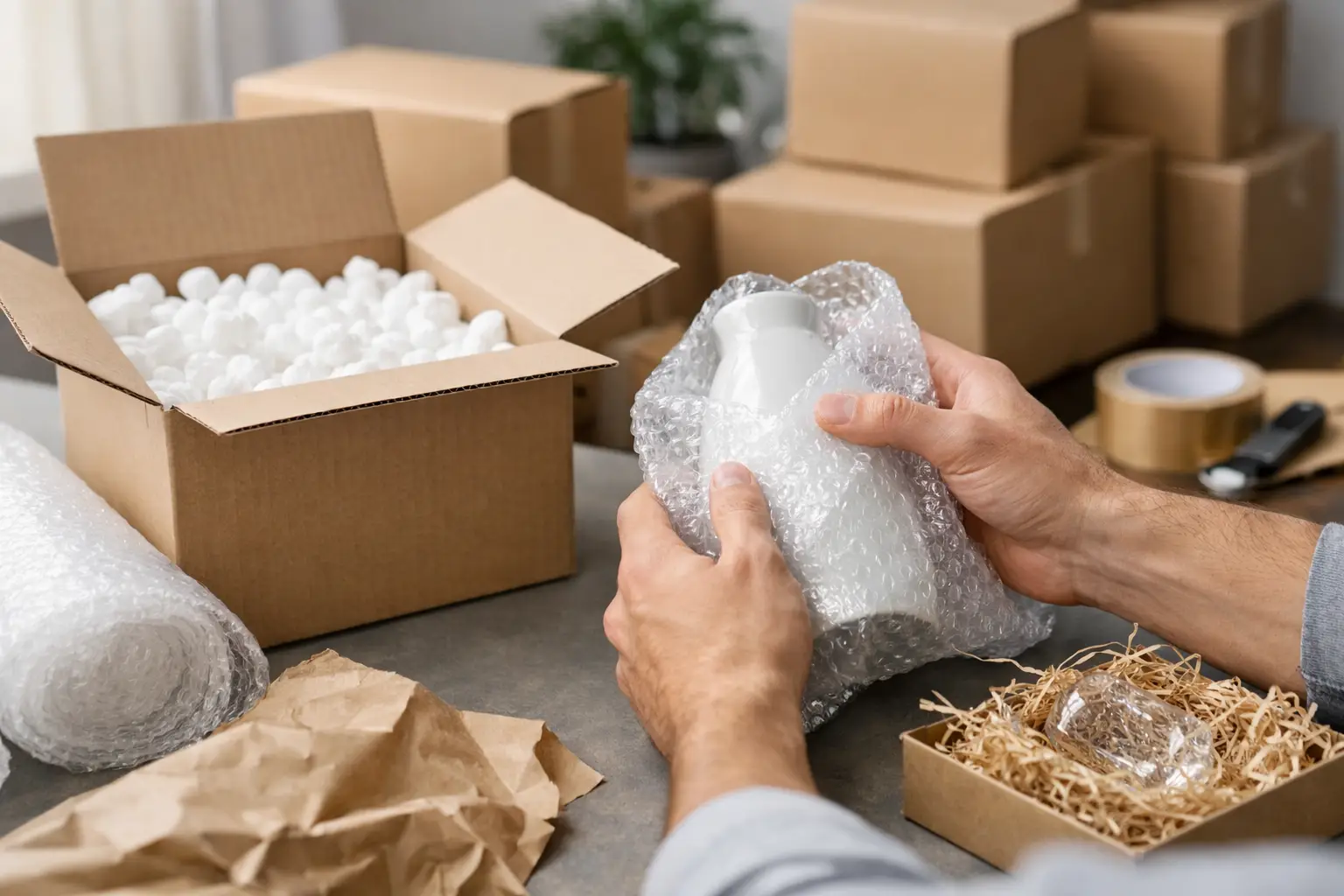
That sinking feeling usually starts with a sound – one clink too many inside a box. If you are planning a house move, clearing a flat into storage, or relocating office equipment, knowing how to pack fragile items properly can save you money, hassle, and a lot of avoidable stress.
Fragile items rarely break because a box was simply lifted. They break because there was space to move, not enough cushioning, too much weight in one carton, or the wrong materials used in the first place. Good packing is less about wrapping everything in endless paper and more about controlling movement from start to finish.
How to pack fragile items without common mistakes
The biggest mistake people make is rushing the packing of breakables at the end of a move. Glassware, ceramics, mirrors, lamps, screens, and ornaments need a bit more planning than clothes or books. If you leave them until the final evening, you tend to grab whatever box is nearby and hope for the best. That is usually when damage happens.
Start by sorting fragile belongings into groups. Kitchen glassware needs a different approach from framed artwork, and a television should not be packed like a set of plates. When similar items are packed together, it is easier to choose the right box size, padding level, and handling method.
It also helps to be realistic about what should be moved and what may be better replaced. A cheap flat-pack mirror with an already weak frame may not be worth the risk of transport. A family heirloom, on the other hand, deserves proper materials and extra care.
Use the right packing materials from the start
If you want to know how to pack fragile items well, begin with materials that hold their shape and protect against impact. Strong double-walled boxes are usually the safest choice for heavier or delicate belongings. Thin supermarket boxes can work for light, non-breakable goods, but they are not ideal for china, glass, or electronics.
Packing paper is better than newspaper for most fragile items because it does not leave ink marks. Bubble wrap adds a useful cushioning layer, especially around awkward shapes, but it should not be the only protection inside a box. You also need void fill – soft material that stops items shifting in transit. That can be crumpled packing paper, foam, or specialist inserts.
Tape matters as well. Weak tape can fail at the bottom of a box when it is being carried down stairs or loaded into a van. Seal the base with more than one strip, and reinforce the edges if the contents are weighty. Labels are worth using too, but do not rely on a “fragile” sticker to make poor packing safe. A clearly marked box still needs to be packed properly.
How to pack fragile items room by room
Kitchenware and glassware
Wrap each glass and mug individually with packing paper. Stemware needs extra care around the stem and base, as those are common pressure points. Plates should be wrapped one by one and packed vertically rather than stacked flat. It sounds backwards, but upright plates often cope better with movement because the weight is distributed more evenly.
Choose a small to medium box for kitchen breakables. Add cushioning to the bottom first, place the heaviest items at the base, and fill all gaps so nothing rattles. If you can gently shake the box and hear movement, it needs more packing.
Ornaments and decorative pieces
Small ornaments should be wrapped individually and packed in a box that is not oversized. If you place several delicate pieces in a large carton with minimal filler, they will knock together on the road. Odd shapes can be tricky, so take your time around handles, protruding edges, and thin ceramic sections.
Lids, detachable parts, and separate bases should be removed and wrapped on their own where possible. This reduces strain on the object itself.
Mirrors, pictures, and framed items
Flat fragile pieces need edge protection as much as front and back padding. Corners are often the first point of impact. Wrap the item fully, protect the corners, and use a picture box or a well-fitted carton where possible. A large mirror in a loose box is asking for trouble.
Tape should never be applied directly to the glass or frame finish unless a manufacturer specifically recommends it. Some surfaces mark easily, and adhesive residue can create a second problem after the move.
TVs, monitors, and electronics
The original box is usually best if you still have it, especially for televisions and computer monitors. These cartons are designed for the weight and shape of the item. If you do not have them, use a sturdy box with enough clearance for padding on every side.
Remove cables, remotes, stands, and accessories and pack them separately in labelled bags or smaller cartons. Screens should be cushioned without putting too much pressure directly on the display. Electronics also need to stay dry, so avoid storing them in damp sheds or unsecured outbuildings before moving day.
Lamps and shades
Lamp bases can be heavy and awkward, while shades dent easily. Pack them separately. Wrap the base well, especially if it is ceramic or glass, and avoid crushing the shade by forcing it into a box that is too small. This is one of those areas where saving space can cost you more later.
Box weight matters more than people think
One strong box filled with too many fragile items becomes difficult to carry safely. The heavier it is, the greater the force if it is set down too quickly or lifted at an angle. That is why smaller boxes are often better for breakables, even if it means using more of them.
Keep heavy fragile items in compact cartons and lighter items in medium boxes. A box should feel secure, not overloaded. If the bottom bows when lifted, repack it before moving it any further.
Pack for transport, not just for storage
A box that survives sitting still in a spare room may not survive a journey across Yorkshire or a longer move elsewhere in the UK. Roads, corners, braking, and repeated lifting all add stress to packed items. That is why the inside of the box matters just as much as the outer carton.
Think in layers. Cushion the bottom, wrap each item, separate pieces where needed, fill empty spaces, and finish with a protective layer on top before sealing. The aim is simple – when the box moves, the contents do not.
This also applies to how boxes are loaded. Fragile cartons should not go under furniture parts, toolboxes, or heavy office equipment. Even excellent packing has limits if too much weight is stacked on top.
When professional packing support makes sense
Some moves involve more risk than others. If you are relocating a full household, transporting antiques, moving office screens, or combining a move with temporary storage, professional packing support can be the safer option. It is particularly useful when time is tight or when fragile items make up a large part of the load.
A professional removals team will usually have the right cartons, protective materials, and handling experience to reduce damage risk. That does not mean every item needs a bespoke crate, but it does mean the packing is matched to the object rather than improvised on the day. For many customers, that peace of mind is worth it.
At Cresswell Transportation, careful handling is part of making the whole move less stressful. Fragile items are often the belongings people worry about most, and with good reason.
A few final checks before sealing each box
Before you tape a fragile box shut, check four things. First, the base is fully sealed and reinforced. Second, each item is wrapped and cushioned from the next. Third, there are no empty gaps inside. Fourth, the box is clearly labelled on more than one side.
It is also worth writing the room destination on the carton. That helps reduce unnecessary shifting around after arrival, which lowers the chance of accidental knocks during unloading.
Packing breakables properly takes a little longer, but it usually saves time overall. You spend less time replacing damaged items, dealing with claims, or discovering chips and cracks after the move. If you approach it with the right materials, sensible box weights, and a bit of patience, fragile belongings are far more likely to arrive exactly as they left.
Leave a Reply