
A washing machine can weigh as much as two adults, while a fridge freezer may be awkward to grip even when empty. Learning how to move appliances safely is not simply about protecting an expensive item. It is about preventing damaged floors, strained backs, leaks, electrical risks and a difficult moving day.
Large appliances need a little more planning than furniture. The right preparation, equipment and handling method can make the job far more straightforward. If an appliance is especially heavy, built in, valuable or connected to gas or plumbing, professional help is often the safest choice.
Plan the route before you disconnect anything
Start by measuring the appliance, doorways, hallways, staircases and the vehicle loading space. Account for doors, handrails, tight corners and low ceilings. A route that looks clear when empty may not leave enough room for a fridge freezer or range cooker to pass through safely.
Remove loose rugs, shoes, boxes and other trip hazards from the route. Protect vulnerable areas such as wooden floors, carpets, door frames and banisters with covering or padded blankets. If you are moving from a flat, check lift dimensions and ask the building manager whether there are any booking or access requirements.
It also helps to decide where the appliance will go at the new property before moving day. There is little benefit in carrying a heavy washing machine into a kitchen only to discover it needs to come back out again to reach its final position.
Disconnect appliances correctly and allow time
Do not leave appliance preparation until the lorry is outside. Most appliances need to be disconnected and cleaned at least a day before the move, and some need longer.
Fridges and freezers
Empty the fridge or freezer completely, including shelves and door compartments. Defrost it well in advance, following the manufacturer’s guidance, and place towels around the base to catch water. Once dry, clean the interior and secure or remove shelves, drawers and trays so they cannot move in transit.
A fridge freezer should normally travel upright. Tilting it briefly to get through a doorway is sometimes unavoidable, but transporting it on its side can allow compressor oil to move into the cooling lines. If it has been tilted, leave it upright for several hours before switching it back on. Check the manufacturer’s instructions, as the recommended standing time varies by model.
Leave the doors slightly open while the appliance is waiting to be moved, where safe to do so, to reduce the chance of trapped moisture and odours. Secure the doors shut before loading.
Washing machines, dishwashers and tumble dryers
Turn off the water supply and disconnect hoses carefully. Drain any remaining water from the hose and filter area into a shallow tray or towel. Even a small amount of water can leak into a vehicle or onto a newly laid floor.
For washing machines, refit the transit bolts if you still have them. These bolts secure the drum and are designed to prevent internal damage during transport. If they are missing, contact the manufacturer for the correct replacements rather than assuming the machine will be fine without them.
Dryers should be emptied and cleaned, with lint removed from the filter. Secure cables and hoses against the appliance with tape that will not mark the finish, or place them in a labelled bag and keep them with the appliance.
Cookers and gas appliances
Electric cookers, built-in ovens and gas appliances need extra care. Gas appliances should be disconnected by a Gas Safe registered engineer. Do not attempt to move a cooker that is still connected to a gas supply, and do not disconnect fixed electrical wiring unless you are qualified to do so.
Built-in appliances may also be fixed to surrounding units or worktops. Forcing them free can damage the cabinet, the appliance or hidden connections. Arrange suitable professional disconnection before the move, then have the appliance reconnected safely at the new address.
Use the right equipment to move appliances safely
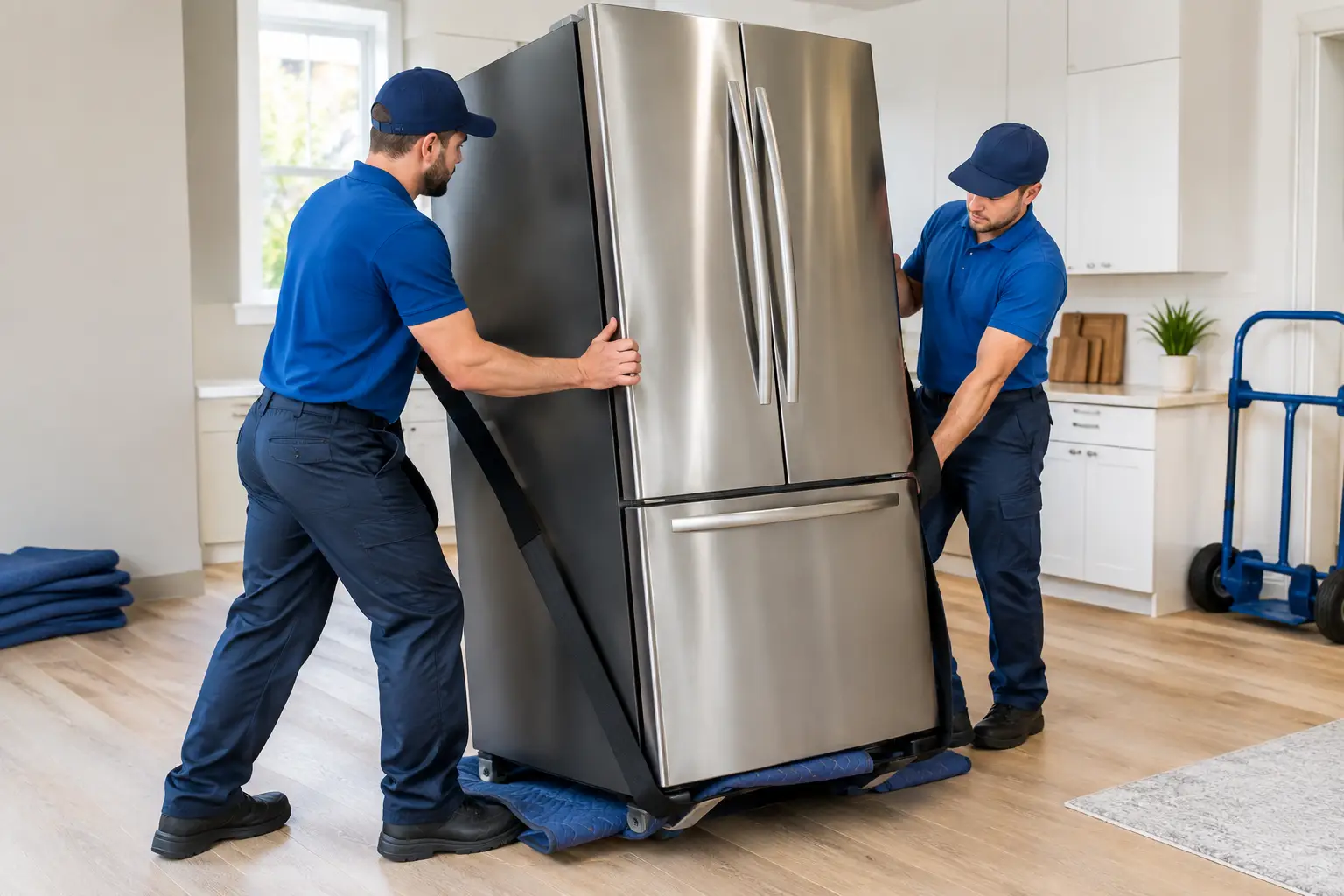
Trying to carry a heavy appliance by hand is where many avoidable injuries occur. Appliance dollies, sack lorries, furniture blankets and securing straps make a real difference, but only when used properly.
For a typical household move, the most useful equipment includes:
- An appliance dolly or heavy-duty sack lorry with a securing strap
- Moving blankets or padded covers to protect corners and finished surfaces
- Floor protection, such as runners or strong cardboard sheets
- Work gloves with a secure grip and closed-toe footwear
A standard sack lorry may be suitable for a smaller dryer or dishwasher, but tall and heavy fridge freezers are often better handled with a purpose-built appliance dolly. The equipment must be rated for the weight involved. Do not rely on lightweight straps, damaged wheels or a borrowed trolley you have not checked.
Keep the appliance upright where possible, particularly refrigeration units and washing machines. Position it centrally on the dolly, tilt it only as far as necessary, and secure it tightly before moving. The person guiding from above should control the load, while the person below should never be placed directly in the appliance’s path on stairs.
Lift with a team, not with your back
Heavy appliances are rarely a one-person task. Even when the weight seems manageable, their shape makes them difficult to control. Plan for at least two capable people, and consider more help for stairs, narrow access or oversized American-style fridge freezers.
Before lifting, agree on the route, stopping points and simple commands such as “lift”, “stop” and “down”. Keep the load close to your body, bend at the knees and avoid twisting while carrying. Take slow, controlled steps. If the appliance feels unstable, put it down safely and reassess rather than trying to correct it mid-lift.
Avoid lifting by appliance doors, handles, control panels, hoses or power cables. These parts are not designed to take the weight. Use the strong lower frame or sides where the manufacturer permits it, and keep fingers clear when lowering the item onto the floor or vehicle ramp.
Stairs deserve particular caution. A heavy appliance can quickly become dangerous if it slips, and a rushed attempt can damage walls as well as injure the people moving it. If the route involves several flights, tight turns or uneven external steps, booking experienced removals support is usually the sensible option.
Load and secure appliances for transport
Once inside the vehicle, appliances should be positioned against a solid side wall or bulkhead rather than left where they can shift. Use moving blankets between items to prevent scuffs and strap each appliance securely to anchor points.
Do not stack boxes on top of appliances, especially fridges, washing machines or cookers. Heavy cartons can dent panels, damage controls and make the load unstable. Keep appliances upright unless the manufacturer specifically confirms another position is safe.
For a long-distance move, check the load after the first part of the journey if access allows. Straps can settle as the vehicle moves, particularly where blankets compress. A properly loaded appliance should not rock, slide or lean against a fragile item.
Reconnect carefully at the new property
Give yourself time after delivery. Put the appliance in position without pushing it across unprotected flooring, then remove all straps, blankets and tape. Check for visible damage before reconnecting anything.
A fridge freezer should stand upright for the manufacturer-recommended period before being switched on. Washing machines need their transit bolts removed before use and their hoses connected securely. After reconnecting water-fed appliances, run a short cycle while checking the valves, hose connections and floor for leaks.
Gas and hard-wired appliances should again be connected by the appropriate qualified professional. It is a small part of the moving process, but it protects your home and gives you confidence that everything is ready to use safely.
Moving appliances does not have to become the hardest part of your relocation. When the job involves difficult access, stairs or several large items, Cresswell Transportation can provide experienced, insured handling so your appliances arrive protected and your moving day stays on track.
Leave a Reply