
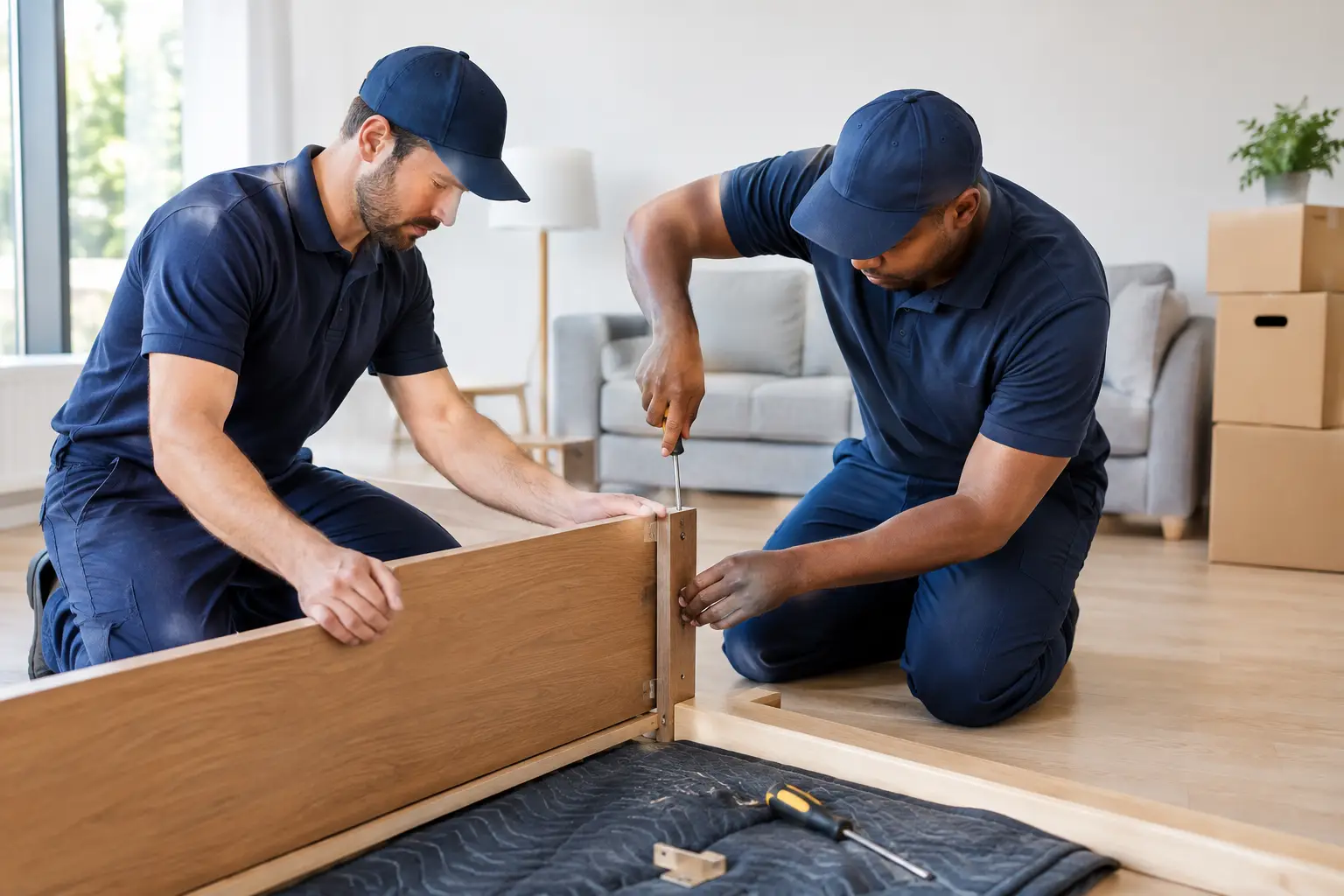
A wardrobe that will not fit through the stairwell can turn a straightforward moving day into a stressful delay. So, can movers dismantle furniture? In many cases, yes. Professional removal teams can take apart suitable items, move them safely and reassemble them at your new property. However, this should always be agreed before moving day, as the right approach depends on the furniture, access and level of service booked.
At Cresswell Transportation, we plan removals around the practical details that make a difference. Knowing what needs dismantling before the team arrives helps protect your belongings, keeps loading efficient and avoids unexpected hold-ups.
What furniture can removal teams usually dismantle?
Most experienced movers can dismantle standard household furniture when it is necessary for safe removal. This commonly includes bed frames, wardrobes, dining tables, bookcases, desks and modular shelving. Larger sofas may also need legs removed to pass through narrow doors or tight hallways.
The aim is not to take apart every item in the house. It is to dismantle only what cannot be moved safely in one piece, or what would be too awkward to carry through the property without risking damage to the item, walls or flooring.
Flat-pack furniture can sometimes be dismantled, but it needs more care. Pieces that have been assembled and disassembled several times may have weakened fittings, chipped panels or loose dowels. A good removal team will assess the item rather than forcing it apart. In some cases, moving it intact is safer. In others, dismantling is the only sensible option.
Beds, wardrobes and large tables
Beds are among the most common items to be taken apart. Divan bases, headboards, bed frames and bunk beds often need separating for easier carrying and loading. Wardrobes may need doors, shelves and rails removed, while large dining tables can usually be made more manageable by taking off the legs.
These jobs are usually straightforward when the furniture is in good condition and the required fixings are accessible. The team should keep components together and protect them for transport, so the item is ready to reassemble at the new address.
Office and commercial furniture
For office moves, dismantling can include desks, workstations, meeting tables, shelving and storage units. Commercial relocations require more planning because furniture often needs to be placed in a specific layout at the new premises. Labelling sections clearly and agreeing a floor plan in advance can reduce disruption for your staff.
Electrical equipment, IT cabling and specialist fixtures are different matters. These may require your own IT provider, facilities team or a qualified specialist. Do not assume every removals service includes electrical disconnection or reconnection.
When movers may not dismantle furniture
There are sensible limits. Removal teams may decline to dismantle an item if doing so is likely to cause damage, if it has a complicated mechanism, or if the manufacturer advises against disassembly. Very old furniture, antiques and poorly built flat-pack pieces can be particularly vulnerable.
Furniture with glued joints, fragile veneer, damaged screws or previous repairs may not withstand being taken apart. The same applies to some fitted wardrobes, wall-mounted units and large items that are secured to the property. These can involve fixings, electrics or structural considerations beyond a standard removals job.
It also depends on what was included in your quotation. A basic transport-only service may cover loading, moving and unloading but not furniture assembly work. A full-service move may include more labour and preparation. The important point is to ask, rather than finding out on the day that the item needs work not included in the booking.
Tell your movers before moving day
The best time to discuss dismantling is when requesting your quote. Mention every large or awkward item, particularly wardrobes, beds, corner sofas, exercise equipment, desks and shelving. Photos are useful because they allow the removal company to judge the likely work, access requirements and number of movers needed.
Be clear about access at both properties. A sofa that fits easily through the front door of your current home may not fit through the entrance, lift or stairwell at the new flat. Measure narrow points where possible, including door widths, landings and turns on the stairs.
You should also say whether you still have the original instructions or spare fittings. This is helpful for complex furniture, though it is not always essential. If you have removed any parts yourself, keep all screws, bolts and brackets in labelled bags and give them directly to the team or keep them with your essentials.
How dismantling is handled safely
A professional approach is about more than bringing a screwdriver. The team should use suitable tools, protect surfaces and keep related components together. Panels, glass shelves and table tops may need wrapping to prevent scratches or knocks during loading.
Where items are dismantled, fixings should be bagged and labelled. Larger pieces should be marked carefully where needed, especially when several similar wardrobes or desk units are being moved. This makes reassembly quicker and reduces the risk of parts being mixed up.
The furniture is then loaded securely in the vehicle, with heavier items positioned safely and fragile components protected from movement. Full insurance cover provides reassurance, but careful preparation remains the best way to prevent avoidable damage in the first place.
What you can do before the team arrives
You do not need to dismantle furniture yourself if this has been included in the removal plan. In fact, partly dismantling a complicated item without keeping the fittings together can create more work later. There are, however, a few simple preparations that help the day run smoothly.
Empty wardrobes, drawers and shelving unless you have specifically been advised otherwise. Remove loose ornaments, lamps, glass shelves and personal items. Clear a route from each large item to the exit, and make sure pets and children are away from the main carrying areas.
For furniture with drawers, check whether the drawers need to come out for safe lifting. Some sturdy units can be moved with lightweight contents inside, while others become too heavy or unstable. Your removal team can advise based on the item and the access available.
Reassembly at your new property
Reassembly should be discussed at the same time as dismantling. If a bed frame or wardrobe has been taken apart for the move, it is usually most helpful to have it put back together in the room where it will stay. Moving a rebuilt wardrobe upstairs afterwards is rarely practical.
Before the team starts, decide where the main furniture will go. This is especially useful in a larger house move, where bedrooms, dining furniture and home office equipment can otherwise end up in the wrong rooms. If you are unsure, prioritise the essentials: beds, key seating and the furniture you need to make the first evening comfortable.
Bear in mind that reassembly can take time, particularly with large wardrobes or detailed flat-pack units. Booking the right service and allowing enough time prevents the final part of the move from feeling rushed.
The practical answer to furniture dismantling
Movers can dismantle furniture, but it should never be treated as an automatic extra. The condition of the item, the access at each address, the type of move and the service you book all affect what is possible. A quick conversation before your quote is confirmed gives the removal team time to plan properly and gives you confidence that there will be no surprises on the day.
A move is easier when the difficult items are dealt with before they become a problem. Flag the wardrobe that will not clear the landing, the bed that needs rebuilding upstairs and the office desk that must be ready for work at the other end. With a clear plan, your furniture can be handled with care and your moving day can stay on schedule.
Leave a Reply